Apple is evaluating a new OLED display backplane technology that could make future Apple Watch models more power efficient, according to a new report from Korean publication The Elec.
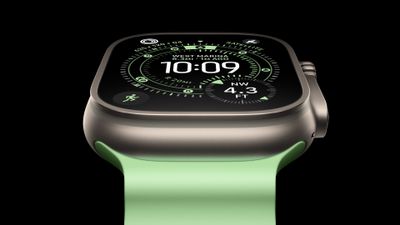
LG Display is said to be developing high-mobility oxide, or HMO, thin-film transistor technology for its sixth-generation small and medium-sized OLED production lines. The technology is reportedly being considered by Apple as a next-generation successor to low-temperature polycrystalline oxide, or LTPO – the TFT backplane technology currently used to enable iPhone and Apple Watch features like always-on displays and variable refresh rates.
HMO is designed to improve on conventional oxide TFT displays by increasing electron mobility (i.e., how easily electrons move through the transistor material when an electric field is applied). Mobility is important for driving OLED panels while keeping power consumption low, and The Elec says current mass-produced oxide TFTs typically offer mobility below 10 cm²/Vs (square centimeters per volt-second), whereas the industry is targeting around 30 to 50 cm²/Vs for its next-generation OLED products.
LG Display is also reportedly using a “sputtering” process that could make the technology easier to integrate into existing production lines.
Meanwhile, OLED supplier Samsung Display is said to be pursuing a different approach that uses atomic layer deposition (ALD), which involves laying down extremely thin films one atomic layer at a time. ALD is a slower process, but it suggests Samsung may be trying to create a more carefully controlled oxide transistor layer than HMO allows for.
The report goes on to suggest that the first Apple product to use LG Display’s HMO technology could be next year’s Apple Watch. Apple has historically tested new display backplane technologies in the Apple Watch before expanding them to larger-volume products such as the iPhone, so this could also represent an initial step towards wider adoption.
The report notes that LG Display still needs to validate the HMO technology for mass production, and that involves verifying mobility, uniformity, reliability, process temperature, and yield. As such, commercial adoption is not yet guaranteed.
So far, rumors suggest this year’s Apple Watch lineup won’t include any major design changes, with a redesign said to be unlikely before 2028. However, those reports don’t necessarily rule out the possibility of Apple adopting the new, more power-efficient OLED technology in 2027.