This article explains the early symptoms and types of breast cancer and when to contact a doctor.

Often, a lump in your breast may be the first sign of breast cancer. Sometimes, a lump is too small to notice during a monthly breast self-exam.
It may not even be noticed by your doctor and may show up only during a screening mammogram.
Other times, the lump may be larger and can easily be felt. Lumps may appear in the breast, the armpit area, or the collarbone. The lump is often painless and may be hard with uneven edges.
Lumps due to breast cancer are rarely perfectly round but are more commonly irregularly shaped.
It is important to note that not all lumps are cancerous but are, instead, noncancerous tumors that do not spread outside of the breast and are not life threatening.
Learn about breast cancer.
Changes to the breast size or shape
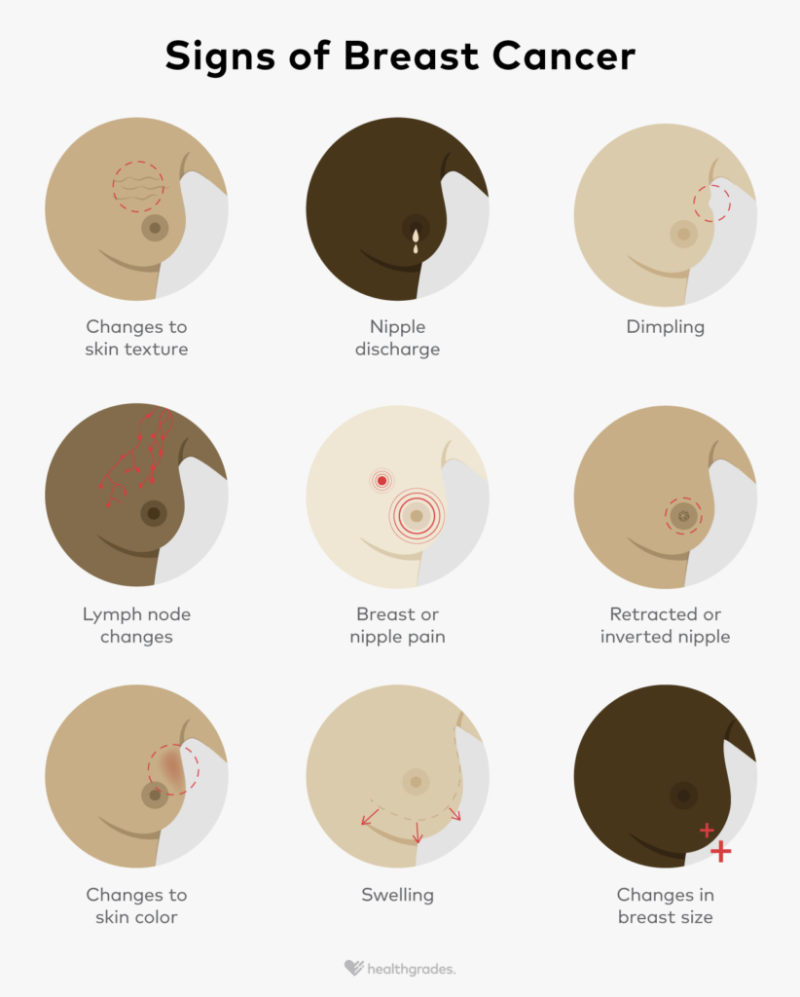
Changes in the shape or size of your breast might indicate an underlying issue, like breast cancer. Sometimes, breast changes are easily felt or seen by you or your doctor. However, many changes are detected only during imaging procedures such as mammograms, MRIs, or ultrasounds.
You may notice swelling to all or part of your breast, even if no lump is felt. The swelling is frequently found in or around your breast, armpit, or collarbone.
See a visual guide to breast cancer symptoms.
Although breast cancer may not cause pain in the breast or nipple, sometimes it does. This may feel like a pulling or tugging in the nipple area. You may also notice that there is pain in the nipple area.
Another sign of breast cancer in the nipple is a turning inward of the nipple, called nipple retraction. This can also occur with aging or other noncancerous breast conditions. You may also have red, dry, or flaky nipples.
The pain in your breast might feel similar to the pain you feel during menstruation. However, contact your doctor if the pain does not go away after your period.
Other than breast milk, nipple discharge might indicate an underlying issue, especially if it is bloody.
The discharge from the nipples may be different textures or colors, such as:
Nipple discharge might be caused by injury or infection, but it may also indicate breast cancer.
Learn more about nipple discharge.
Changes in the texture of the skin of your breasts might be concerning. These changes might include:
- swelling
- irritation
- flakiness
- redness or discoloration
A characteristic finding in breast cancer is swelling, or edema, of the skin, known as peau d’orange. This occurs when the breast cancer cells block the lymphatic system.
Another skin change that frequently occurs in people with breast cancer is dimpling or puckering of the skin. It is sometimes described as looking like an orange peel.
You may notice a lump in your breast near or in the armpit or the collarbone. This may indicate that cancer has spread from the breast to the lymph nodes. The lymph nodes are a part of the lymphatic system, a network of vessels throughout your body that remove waste products.
When there is lymph node involvement, it is one of the most critical factors in determining the outlook of breast cancer. Once the lymph nodes have become involved, the tumor is considered invasive. This means it has spread from the breast to other body parts, otherwise known as metastatic cancer. Metastasis is more likely with a larger tumor.
Learn about metastatic breast cancer.
Signs of breast cancer in males
Males also have breast tissue and can develop breast cancer. Their breast tissue still has ducts but few lobules, especially after puberty. Even though they have very low levels of the hormones that produce breast growth, there is still a chance that cancer cells can grow there.
Types of breast cancer and signs and symptoms are similar to those experienced by females. Breast cancer in males is usually less than 1% of total breast cancer diagnoses.
It is important to note that a common breast disorder in males at birth is gynecomastia. It may look and feel like a lump, but it is an increase in breast tissue. You can usually feel it just below the nipple.
A hormone imbalance causes it either during puberty or later in life. If gynecomastia occurs later in life, it may be due to conditions such as liver disease, obesity, or certain medications.
Learn more about male breast cancer.
There are many types of breast cancer. These include:
Less common types of breast cancer include:
- Paget’s disease of the breast
- angiosarcoma
- phyllodes tumor
Breast changes are common, especially throughout a menstrual cycle. Some breast changes may be signs of less serious conditions, such as cysts or infections.
However, if you notice a new lump, have pain, or have changes to the skin texture in either one or both of your breasts, contact your doctor. Early detection and treatment of breast cancer in important in the effectiveness of treatment and overall outcome.
The most common first sign of breast cancer is a new lump or mass in the breast, armpit, or collarbone area.
Other early symptoms of breast cancer include changes to the size and shape of your breast, skin changes, and nipple discharge that is not milk.
Early detection and treatment are key in the outlook for breast cancer. Contact your doctor if you notice any new lumps, swelling, or changes to your breasts.