Atul Gawande, the head of the U.S. Agency for International Development’s global health office, is trying to figure out how to tackle one of the world’s biggest crises in decades as governments struggle to fund the effort.
After two years of the Covid-19 pandemic, the world recorded a 20 percent increase in the overall death rate and the first decline in global life expectancy in a century. The virus has killed millions across the globe — and shut economies, ravaged health systems and slashed the health care workforce. Low-income countries remain highly unvaccinated and the war in Ukraine is leading to food shortages, worsening the conditions for people living through droughts in parts of Africa. Now, monkeypox infections are causing some countries to scramble for vaccines. Combined, global officials confront health emergencies that are increasingly dire — and deadly — as nations wrestle with putting up money to curb their growth.
For Gawande, the past two years have shown exactly how a pandemic can leave the world with far fewer resources to ensure safety and it has underscored how governments and the global health community need to commit significantly more money to reverse the downward trend of life expectancy — to ensure the sick don’t get sicker.
But that might not be possible right now — a reality that is concerning officials like Gawande whose job it is to help protect the vulnerable and save lives overseas. In just the past few months, despite Covid cases continuing to circulate and vaccinations moving slowly in low-income countries, wealthy western countries have slashed global Covid budgets by millions.
“It is a mistake of epic proportions,” Gawande said in a recent interview. “Covid is not over. It is a continuing recurrent illness that we will be living with, at least for the next few years to come. And being prepared for a health system, whether it’s in the United States or abroad, that is going to have more hospital visits, more needs hitting primary health care offices … We need to make sure that the health systems at home and around the world have the basic tools to respond.”
Gawande spoke with POLITICO in a wide-ranging interview about the future of the global health office at USAID and how it plans to deliver key services to low-income countries and vulnerable populations at a time when the world faces multiple crises at once.
The question Gawande and his team must answer in the coming months is whether and how the U.S. — traditionally a massive player in global health and humanitarian aid — will try to help the world reverse course. And whether the U.S. will commit more resources to that fight. Congress this spring failed to sign off on new funding for USAID to continue its global Covid work. And with the U.S. economy weakened, agency officials worry about Congress approving the proposals put forward in President Joe Biden’s budget for global health efforts.
That puts Gawande’s office on an uneasy footing as it tries to both wrap the Covid projects it is working on with low-income countries and to envision a strategy that will, over the next several years, tackle infectious disease outbreaks, food insecurity and other public health crises. During the pandemic, some of those public health challenges intensified as more resources were shifted toward prioritizing the fight against Covid.
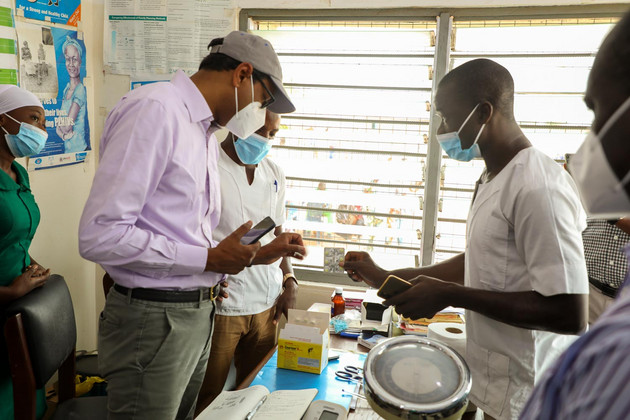
Gawande joined USAID in January 2022 just as Covid vaccines were beginning to arrive in bulk to low-income countries. He stepped into the lead position in the global health office and joined forces with Jeremy Konyndk, the executive director of the Covid-19 task force and senior adviser to the USAID administrator, to help renew efforts to get shots into arms across the world. But just as soon as USAID announced and formally launched its new Covid vaccine program — dubbed Global Vax — lawmakers on Capitol Hill were in the throes of negotiating whether to approve new funding the agency would need to continue its global Covid work for the rest of the year.
The talks among lawmakers lasted for months as Democrats battled competing priorities — approving new funding for the war in Ukraine but failing to come to a compromise on both domestic and international Covid aid. The entire saga has left top officials at USAID angry — rattled, even — as they try to rejigger the agency’s priorities. With dwindling funding, some staff have left the Covid team.
“When I took the job, I felt like Covid had unleashed both a terrible crisis and an opportunity to make investments in the part of public health that matters the most. Building it around our ability to make a sound, primary health care scaffolding that can enable these capabilities is the single most important thing I hope I can accomplish in this role,” Gawande said.
Since the beginning of the year, Gawande’s office has focused on its Global Vax programs in low-income countries — helping governments hire health care workers to increase vaccination rates. Some of those countries have improved their overall immunization levels. Others are still struggling. But almost all are still dealing with the indirect impact of Covid — the strain on the health care system.
Gawande said his office will prioritize helping to rebuild and retrain the health care workforce across the world, particularly in countries still struggling. In other words, Gawande said, USAID will work with countries to strengthen their health care systems so that if there is another large infectious disease outbreak, they can withstand the strain. Gawande also wants to bolster those systems so they can improve their basic public health work — helping countries provide medicines for HIV and malaria, and treatment for other chronic conditions, such as diabetes.