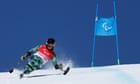
The tireless work of a small team of volunteers has ensured that achievements at the Games are no longer overlooked
Before each summer and winter Paralympics, Tony Naar and his small team of enthusiastic volunteers set themselves a challenge: to create a Wikipedia page for every Australian para-athlete competing at the Games. In the past decade, this group – known as the Australian Paralympic history project – have created over 1,000 articles for para-athletes past and present. For each one, however, they have faced an obstacle: Wikipedia’s notability policy, which requires articles to “be notable, or ‘worthy of notice’”.
The project began prior to the London 2012 Paralympics. At the time, they partnered with Wikimedia Australia, the local chapter of the global Wikimedia Foundation, to offer an incentive: the two volunteers who created and edited the most articles ahead of the Games would win a free trip to London. “But one of the things we confronted was the notability requirement,” says Naar, a semi-retired sports administrator who previously worked for Paralympics Australia. “If you’re an Olympic athlete, you automatically met those notability requirements – just by being an Olympic athlete. Being a Paralympic athlete wasn’t good enough – you had to be a medallist or otherwise meet the notability requirements.”
Continue reading…The tireless work of a small team of volunteers has ensured that achievements at the Games are no longer overlookedBefore each summer and winter Paralympics, Tony Naar and his small team of enthusiastic volunteers set themselves a challenge: to create a Wikipedia page for every Australian para-athlete competing at the Games. In the past decade, this group – known as the Australian Paralympic history project – have created over 1,000 articles for para-athletes past and present. For each one, however, they have faced an obstacle: Wikipedia’s notability policy, which requires articles to “be notable, or ‘worthy of notice’”.The project began prior to the London 2012 Paralympics. At the time, they partnered with Wikimedia Australia, the local chapter of the global Wikimedia Foundation, to offer an incentive: the two volunteers who created and edited the most articles ahead of the Games would win a free trip to London. “But one of the things we confronted was the notability requirement,” says Naar, a semi-retired sports administrator who previously worked for Paralympics Australia. “If you’re an Olympic athlete, you automatically met those notability requirements – just by being an Olympic athlete. Being a Paralympic athlete wasn’t good enough – you had to be a medallist or otherwise meet the notability requirements.” Continue reading…