The Apple Watch Series 12 is now available, two years after the Series 10 introduced the current thinner design. But is it worth upgrading?
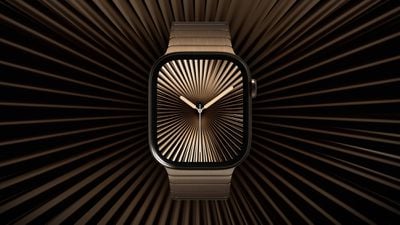
While last year’s Series 11 brought just four changes, the Series 12 is a much more substantial update, with a new chip, twice as much RAM, redesigned health sensors, exclusive health and audio features, tougher cover glass, 5G connectivity, and new case materials.
The Series 12 starts at the same $399 price as the Series 10 did in 2024. Apple has now discontinued the Series 10, but remaining units may still be available from third-party retailers and on the refurbished or second-hand market. Here are all of the key hardware and feature differences between the Apple Watch Series 10 and Apple Watch Series 12:
| Apple Watch Series 10 | Apple Watch Series 12 |
|---|---|
| S10 chip (2024) | S11 chip (2026) |
| 2GB RAM | 4GB RAM |
| Electrical heart sensor | Health Sensing System with second-generation electrical heart sensor |
| Third-generation optical heart sensor | Fourth-generation, always-on optical heart sensor |
| Periodic background heart rate tracking | High-frequency background heart rate tracking every five seconds |
| Heart rate variability | Recovery HRV and overall HRV, measured up to 24x more frequently |
| Vitals app with heart rate, respiratory rate, wrist temperature, and sleep duration | Vitals app with heart rate, respiratory rate, wrist temperature, sleep duration, and HRV, plus daytime vitals |
| Readiness app with daily score and recommendation | |
| Standard step tracking | Redesigned pedometer model with more accurate all-day step tracking |
| Steps watch face complication | |
| Audio Intelligence, including Live Rewind, Siri Recap, Sound Recognition, and faster Shazam | |
| Ion-X front glass (aluminum models) | Ceramic Shield 2, 60% tougher than Ion-X (aluminum models) |
| Metal and sapphire crystal back | Case-matched metal or ceramic and zirconia back |
| Aluminum or titanium case | Aluminum, titanium, or ceramic case |
| Aluminum: Jet Black, Rose Gold, and Silver | Aluminum: Dark Bronze, Light Gold, Black, and Space Gray |
| Titanium: Slate, Gold, and Natural | Titanium: Radiant Gold and Natural |
| Ceramic: Pearl White and Night Blue | |
| Hermès: Silver titanium | Hermès: Silver and Radiant Gold titanium |
| LTE and UMTS (cellular models) | LTE and 5G RedCap (cellular models) |
| Up to 18 hours of normal use | Up to 24 hours of normal use |
| Up to 36 hours in Low Power Mode | Up to 38 hours in Low Power Mode |
| 15 minutes of charging for up to eight hours of normal use | 15 minutes of charging for up to 12 hours of normal use |
| Eight minutes of charging for up to eight hours of sleep tracking | Five minutes of charging for up to 10 hours of sleep tracking |
| Now discontinued | From $399 |
Design and Display
The Series 12 retains the same basic design introduced by the Series 10, including 42mm and 46mm size options and a 9.7mm-thick case. Nevertheless, Apple has made some subtle dimensional changes. Both sizes are now 1mm wider, and every equivalent aluminum or titanium configuration is between 2.1 and 3.3 grams heavier than its Series 10 counterpart.
At the same time, the display has shrunk slightly. Resolution is unchanged, but the active display area is around 2% smaller on both sizes. The combination of a wider, receded case and smaller display produces thicker borders around the screen.
Here is how the 46mm models compare:
| 46mm | Apple Watch Series 10 | Apple Watch Series 12 |
|---|---|---|
| Dimensions | 46mm x 39mm x 9.7mm | 46mm x 40mm x 9.7mm |
| Resolution | 416 x 496 pixels | 416 x 496 pixels |
| Display area | 1,220 sq mm | 1,196 sq mm |
| Aluminum (GPS) | 36.4 grams | 39.5 grams |
| Aluminum (Cellular) | 35.3 grams | 38.6 grams |
| Titanium | 41.7 grams | 44.9 grams |
The 42mm models compare as follows:
| 42mm | Apple Watch Series 10 | Apple Watch Series 12 |
|---|---|---|
| Dimensions | 42mm x 36mm x 9.7mm | 42mm x 37mm x 9.7mm |
| Resolution | 374 x 446 pixels | 374 x 446 pixels |
| Display area | 989 sq mm | 970 sq mm |
| Aluminum (GPS) | 30 grams | 32.2 grams |
| Aluminum (Cellular) | 29.3 grams | 31.5 grams |
| Titanium | 34.4 grams | 36.5 grams |
The Series 12 also marks the return of a ceramic Apple Watch for the first time since the Series 5 Edition in 2019. The ceramic models are larger and heavier than their aluminum and titanium counterparts:
| Ceramic | 46mm | 42mm |
|---|---|---|
| Dimensions | 47mm x 41mm x 9.85mm | 43mm x 37mm x 9.85mm |
| Pearl White | 51.3 grams | 41.7 grams |
| Night Blue | 52.9 grams | 42.8 grams |
Is It Worth Upgrading?
Two generations on, the Series 12 represents a meaningful cumulative upgrade over the Series 10, but it is far from an essential replacement. The two models share the same basic design, display brightness, resolution, storage capacity, core safety features, and more. The Series 10 is only two years old, and supports watchOS 27 and Siri AI, so it remains a capable and modern Apple Watch.
For existing Series 10 owners, upgrading is easiest to justify if health and fitness tracking is a priority. The Series 12’s high-frequency heart rate sensing, Recovery HRV, daytime vitals, Readiness score, and improved step tracking provide substantially more useful training and recovery data. Sound Recognition may be compelling for deaf or hard of hearing users, while 5G, faster charging, tougher cover glass on aluminum models, and the ceramic case provide additional reasons for some buyers to upgrade.
Beyond this, the practical difference between the two devices is relatively small. The Series 12 is also slightly wider and heavier, and its active display area is around 2% smaller despite retaining the same resolution. Its 24-hour battery rating is also not directly comparable with the Series 10’s 18-hour figure because Apple changed its testing methodology. If your Series 10 still comfortably lasts through the day and you are satisfied with its existing health features, there is no strong general-purpose reason to replace it.
Which to Buy Today?
At its $399 starting price, the Series 12 is the obvious choice over a Series 10 selling for anything close to its original price. The newer model offers a better health sensing system, twice as much RAM, the S11 chip, exclusive Audio Intelligence features, faster charging, 5G, and more case options. A saving of only $50 to $100 is unlikely to compensate for giving up those improvements.
The Series 10 becomes attractive when it is at least around $150 cheaper than an equivalent Series 12 and is in excellent condition. It still offers an always-on display, ECG, temperature sensing, sleep apnea and hypertension notifications, advanced workout tracking, and Siri AI. Buyers should pay particular attention to battery health and warranty coverage, since replacing a degraded battery could quickly erode the saving.