The Apple Watch Series 12 and Apple Watch Ultra 4 bring new health sensors, a new chip, and more detailed recovery insights to Apple’s smartwatch lineup, so how do they compare?
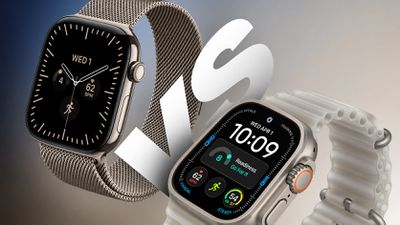
Both models feature the S11 chip, 4GB of RAM, 64GB of storage, and the new Health Sensing System, which measures heart rate every five seconds throughout the day. They also share Readiness, Recovery HRV, daytime vitals, improved step tracking, hypertension notifications, sleep apnea notifications, Sleep Score, and more. This means that the Ultra 4’s higher price does not buy you more advanced everyday health tracking.
The Apple Watch Series 12 starts at $399, while the Apple Watch Ultra 4 starts at $799. The gap narrows if you want a premium case material, with the titanium Series 12 starting at $699. This year, the Series 12 also gains a ceramic option starting at $899, making it more expensive than the Ultra despite its smaller size and shorter battery life.
The Apple Watch Ultra continues to focus on durability, extended battery life, and additional capabilities for activities like diving and exploration. Our guide helps to answer the question of how to decide which of these two Apple Watches is best for you. The differences between the Apple Watch Series 12 and Apple Watch Ultra 4 are as follows:
| Apple Watch Series 12 | Apple Watch Ultra 4 |
|---|---|
| Rounded design with a thinner case and front glass that curves at the edges | Rugged design with a thicker case and slightly raised edges to protect the flat front crystal |
| Aluminum, polished titanium, or polished ceramic case | Blasted titanium case |
| Aluminum and titanium: 42mm and 46mm case sizes Ceramic: Marketed as 42mm and 46mm, with actual heights of 43mm and 47mm |
49mm case size |
| 42mm aluminum and titanium: 37mm case width 43mm ceramic: 37mm case width 46mm aluminum and titanium: 40mm case width 47mm ceramic: 41mm case width |
49mm titanium: 44mm case width |
| Aluminum and titanium: 9.7mm case depth Ceramic: 9.85mm case depth |
12mm case depth |
| Weighs 31.5 to 52.9 grams depending on case size, material, finish, and connectivity | Natural titanium: 63.0 grams Black titanium: 63.1 grams |
| Aluminum: Ceramic Shield 2 front glass Titanium and ceramic: Sapphire front crystal |
Sapphire front crystal |
| 42mm: 374 by 446 pixels 46mm: 416 by 496 pixels |
422 by 514 pixels |
| 42mm: 970 sq mm display area 46mm: 1,196 sq mm display area |
1,245 sq mm display area |
| Up to 2,000 nits peak brightness | Up to 3,000 nits peak brightness |
| Exclusive Wayfinder, Modular Ultra, and Orienteering faces | |
| Night Mode on Apple Watch Ultra faces | |
| Customizable Action button, including Precision Start for workouts | |
| 86-decibel Siren to attract attention | |
| Single speaker | Dual speakers |
| Single microphone with Voice Isolation | Three-microphone array with beamforming and wind noise mitigation |
| Aluminum: GPS or GPS + Cellular options Titanium and ceramic: GPS + Cellular |
GPS + Cellular on all models |
| U.S. TDD cellular bands: 5G n38, n40, and n41; LTE 38, 39, 40, and 41 | U.S. TDD cellular bands: 5G n38, n40, n41, and n53; LTE 38, 39, 40, 41, and 53 |
| Satellite communications for Emergency SOS, Messages, and Find My | |
| Precision L1 GPS | Precision dual-frequency GPS (L1 and L5) |
| GPS, GLONASS, Galileo, QZSS, and BeiDou support | GPS, Galileo, QZSS, and BeiDou support |
| Water resistant to 50m | Water resistant to 100m |
| Suitable for swimming and snorkeling | Suitable for swimming, snorkeling, high-speed water sports, and recreational scuba diving to 40m |
| Depth gauge and Depth app to 6m | Depth gauge and Depth app to 40m |
| Tested to MIL-STD 810H | |
| EN13319 certification for recreational scuba diving | |
| Recommended ambient operating temperature of 0°C to 35°C | On-wrist operating temperature of -20°C to 55°C |
| Always-on altimeter | Always-on altimeter with expanded operating range from -500m to 9,000m |
| Operating altitude from 0m to 3,000m | Operating altitude from -500m to 9,000m |
| Up to 24 hours of normal use | Up to 50 hours of normal use |
| Up to 38 hours in Low Power Mode | Up to 84 hours in Low Power Mode |
| Up to 10 hours of standard outdoor workout tracking | Up to 18 hours of standard outdoor workout tracking |
| Up to 25 hours in Extended Workout mode with full GPS and heart rate readings | |
| Up to 45 hours in Max Extended Workout mode, retaining GPS readings every second | |
| Charge from 0 to 80% in about 30 minutes | Charge from 0 to 80% in about 45 minutes |
| 15 minutes of charging for up to 12 hours of normal use | 15 minutes of charging for up to 18 hours of normal use |
| Aluminum: Dark Bronze, Light Gold, Black, and Space Gray Titanium: Radiant Gold and Natural Ceramic: Pearl White and Night Blue |
Natural Titanium or Black Titanium |
| Hermès: Silver or Radiant Gold titanium | Hermès: Natural titanium |
| 40% recycled content in aluminum and titanium models | 45% recycled content |
| Aluminum: Starts at $399 Titanium: Starts at $699 Ceramic: Starts at $899 Hermès: Starts at $1,399 |
Standard: Starts at $799 Hermès: Starts at $1,499 |
For most users, the Apple Watch Series 12 is the better choice. It offers the same performance, health sensors, Readiness insights, and Audio Intelligence features as the Ultra 4 in a thinner, lighter device. The aluminum model delivers these benefits for $400 less, making it the stronger option for everyday use and regular workouts.
The Ultra 4’s most broadly useful advantage is battery life. Its longer endurance makes overnight wear and extended workouts easier to fit around charging. You do not need to be an endurance athlete to appreciate less frequent charging, but the premium is easier to justify if the Series 12 cannot comfortably cover your usual activities and charging habits.
For hiking away from cellular coverage, recreational scuba diving, or very long events, the Ultra has a clearer purpose. Satellite communications, dual-frequency GPS, greater water resistance, and extended workout modes address needs that the Series 12 cannot fully meet. The Action button and brighter display may also appeal to enthusiasts who simply want more capable hardware.
Size and appearance remain substantial trade-offs. The Ultra is considerably bulkier and heavier despite offering a display only slightly larger than the 46mm Series 12’s. The Series 12 is more discreet and offers polished titanium and ceramic finishes, making it better suited to buyers who prioritize comfort or appearance. Try on the Ultra before buying if you are unsure about its size.
The decision becomes closer if you already want the titanium Series 12, since its starting price is just $100 below the Ultra’s. At that point, paying more for longer battery life and additional hardware is reasonable if you are comfortable with the larger case. The $899 ceramic Series 12 is primarily a choice of material and finish; choose it because you prefer its appearance, rather than expecting more capabilities than the $799 Ultra.