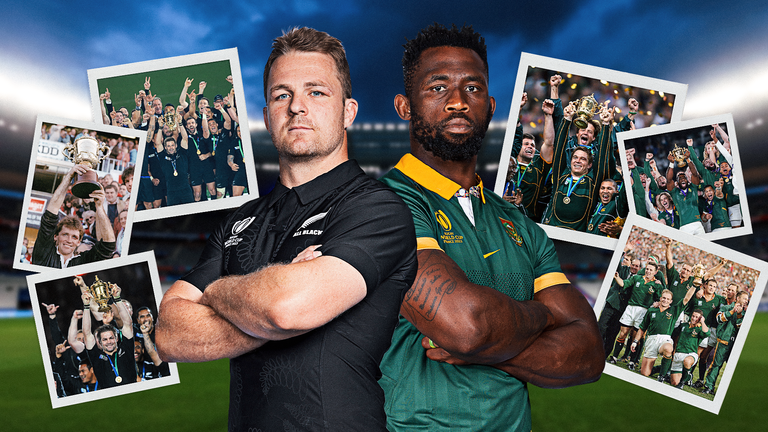
In 2026 there is no Rugby Championship, but there is a throwback-type tour which sees New Zealand’s All Blacks visit South Africa for eight matches, including four Tests against the Springboks, live on Sky Sports.
It’s been advertised in New Zealand and South Africa as “Rugby’s Greatest Rivalry Tour.” A series of games to celebrate over a century of contests between the two most successful nations the sport has seen.
The All Blacks have already played and beaten the Stormers, Sharks and Bulls so far, and face the Springboks in Tests on August 22, August 29, September 5 and September 12.
So, what is the history between the two? And what have been the flashpoints and major moments over the decades? We take a look…
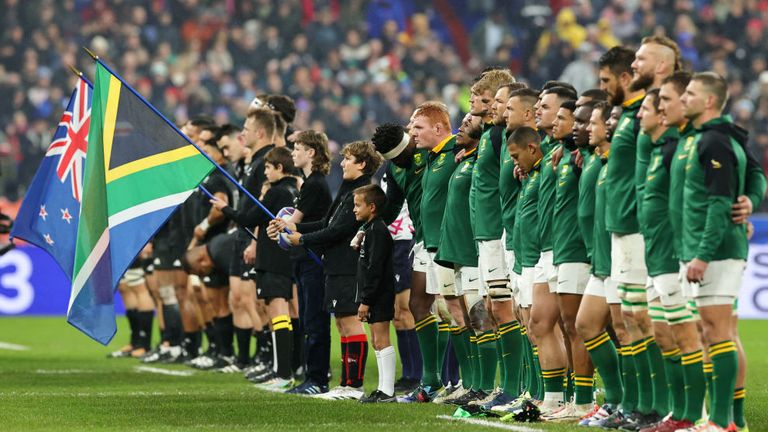
All Blacks vs Springboks – is it rugby’s greatest rivalry?
The birth of a rivalry
New Zealand and South Africa first met on August 13, 1921 in Carisbrook, Dunedin as part of South Africa’s three-Test tour, with the All Blacks coming out with a 13-5 victory.
South Africa won a week later at Eden Park 9-5, with the third Test a 0-0 draw in Wellington to see the series end 1-1. And so set in motion a rugby rivalry which has endured right at the apex of the sport.
That first match included, there have been some 110 Test meetings, the All Blacks winning 63, South Africa 43 and four draws.
There have been 54 Tests played in South Africa, with the hosts winning 28, New Zealand 25 and one draw, while 48 Tests in New Zealand have seen the All Blacks win 34, Springboks 11 and three draws.

In 2023, South Africa captain Siya Kolisi spoke about the history of their rivalry with New Zealand
At Rugby World Cups, South Africa have beaten New Zealand in two dramatic finals (1995, 2023), and in one third-place playoff (1999), while New Zealand have beaten South Africa in the 2015 semi-finals, 2003 quarter-finals and 2023 pool stages.
After that original 1921 tour, the next time the sides met came in 1927 when New Zealand toured South Africa and again, the series finished in a captivating draw: 2-2 this time with wins for the Boks in Durban and Port Elizabeth, and wins for the All Blacks in Johannesburg and Cape Town.
South Africa won the next two series between the sides, touring New Zealand in 1937 and winning 2-1, while hosting the All Blacks in 1949 and winning 4-0.
In 1956, New Zealand get their own back as they clinched a 3-1 home series success over the Springboks, though 1960 saw South Africa back to winning ways via a 2-1 series win back on home soil.
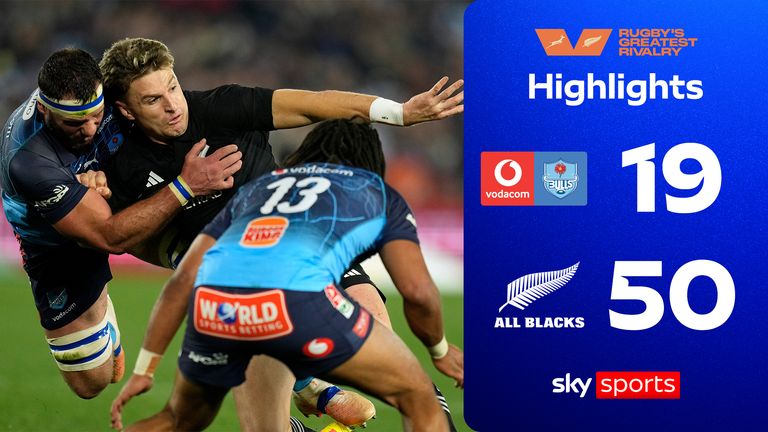
Highlights of the Greatest Rivalry tour match between the Bulls and New Zealand in Pretoria
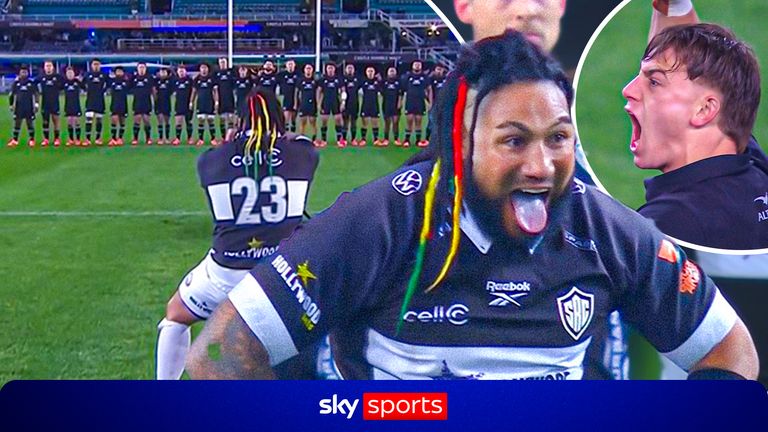
Ma’a Nonu gave his former All Blacks team-mates the ultimate show of respect by responding to their haka with one of his own
South Africa’s apartheid era, worldwide sporting ban and protests
Between 1948 and 1994, though, South Africa enforced apartheid, the institutionalised racial segregation and white minority rule.
As part of this shameful system, South Africa refused to allow people of different races to play sport together, with officials requesting Māori players not be involved in series between the nations. New Zealand agreed and excluded some of their finest players from several tours, with the first major public protests coming during that 1960 tour to South Africa.
By 1964, South Africa as a sporting nation were barred from participating at the Tokyo Olympic Games, and in 1970 they were formally expelled from the International Olympic Committee. They were excluded from international tennis and the Davis Cup the same year.
Throughout the rest of the 1970s, widespread cancellations and bans for South Africa in international sport continued, but rugby proved one of the last to take action.
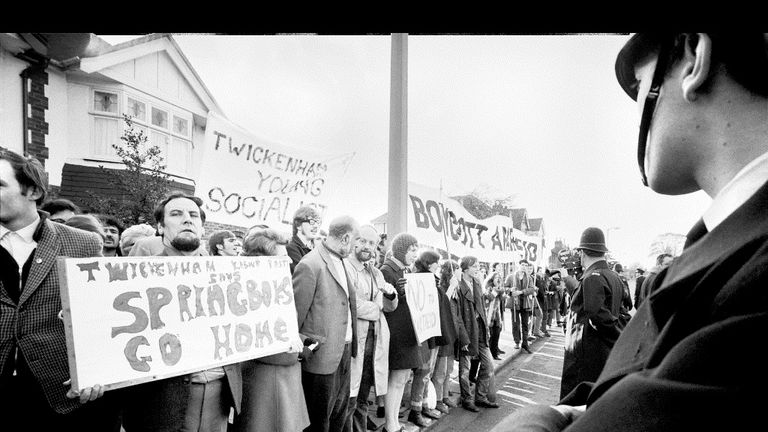
Indeed, 1965 saw South Africa tour New Zealand with the All Blacks winning three Tests to one, before the Halt All Racist Tours protest group was established in New Zealand in 1969 to oppose continued tours to and from South Africa.
The All Blacks toured South Africa in 1970 in any case, losing 3-1 to the Springboks, and though a 1973 tour to New Zealand was cancelled amid a climate of South Africa’s worldwide sporting expulsion, series between the nations still took place in 1976 and 1981 – South Africa winning the former at home 3-1, and New Zealand the latter series 2-1 which was dogged by protests and worldwide condemnation.
Indeed, during that 1981 tour two games were cancelled. One in Hamilton saw 200 protestors rip down a chain fence, sprinkle nails all over the pitch and stage a sit-in on the halfway line, while a match against South Canterbury at Timaru was cancelled because the authorities said they would not be able to control demonstrations there.
During the final Test of the tour, an aircraft continually flew overhead the pitch and dropped flour bombs, flares and leaflets in protest. All Blacks prop Gary Knight was temporarily stunned by a flour bomb.
Eventually, the planned 1985 series between the two was cancelled in line with South Africa’s wider sporting ban, with a legal ruling in New Zealand determining it would be “incompatible with the NZRFU’s legally stated purpose of fostering and encouragement of the game of rugby.”
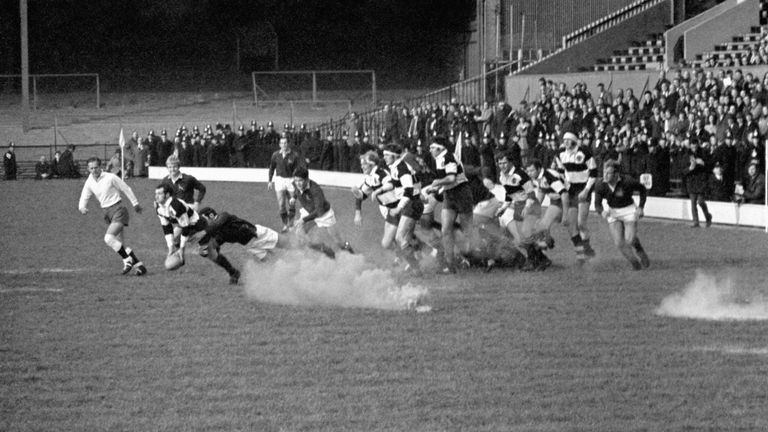
An orange smoke bomb is thrown onto the pitch by anti-apartheid protestors during South Africa vs Barbarians
The Springboks were barred from rugby’s first two World Cups in 1987 and 1991, while a 1986 British and Irish Lions tour was also cancelled.
After the 1985 series between South Africa and New Zealand was cancelled, a ‘rebel tour’ which was not government-sanctioned was organised, and a team travelled in 1986 called New Zealand Cavaliers. The Kiwi players involved received condemnation, were banned for several Tests after the tour and some never played for New Zealand again.
South Africa’s return to international sport and contentious World Cup glory
Upon the end of the apartheid regime, South Africa organised a Test against the All Blacks in 1992 for their first encounter since being welcomed back to international sport, and even went on to surprisingly win it 27-24 at Ellis Park.
With the released Nelson Mandela inaugurated as president in 1994, he encouraged all South Africans to back the previously hated Springboks.
In 1994, South Africa toured New Zealand for the first time in nearly 20 years, losing two Tests and drawing one, with South Africa then hosting the 1995 Rugby World Cup.
Ranked ninth in the world after their lengthy period of sporting exile, South Africa shocked many by progressing to the final where Jonah Lomu and the All Blacks awaited.
A fairytale 15-12 World Cup final victory over New Zealand at Ellis Park followed, but was there foul play involved?
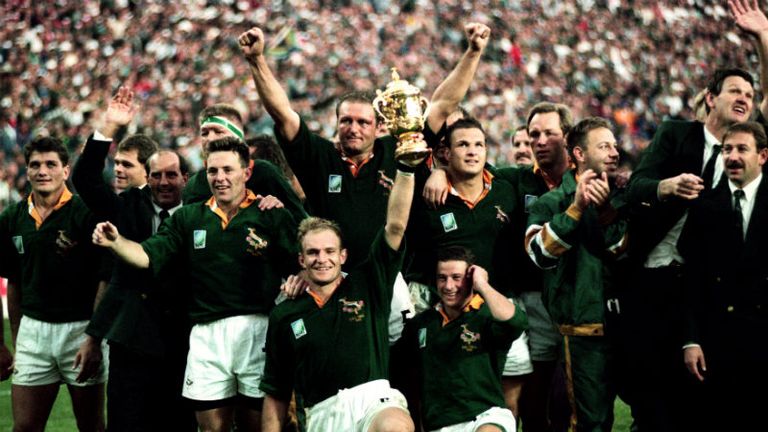
South Africa shocked the world by returning to international sport and winning the 1995 World Cup on home soil
The All Blacks had outscored their opponents 315-104 en route to the final, and were heavy, heavy favourites, yet they failed to score a single try in a contest that went through extra- time. How?
For many, the reason lies with the fact that a hefty proportion of the New Zealand team were struck down by illness or food poisoning on the cusp of the final.
For All Blacks head coach at the time, Laurie Mains, the culprit was a disappearing waitress named ‘Suzie’ – a conspiracy theory that was never proven, though Mains even hired a private investigator after the final. Team doctor Mike Bowen has also always insisted the All Blacks were poisoned, as has South African security guard Rory Steyn.
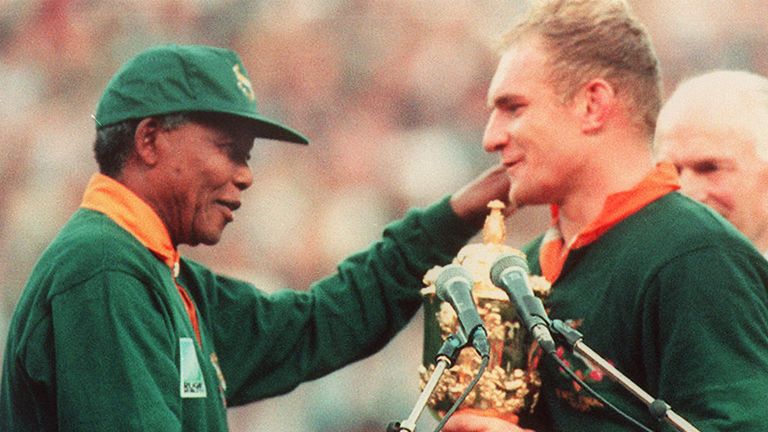
Nelson Mandela handing Springboks captain Francois Pienaar the 1995 Rugby World Cup trophy in South Africa is one of sport’s most famous images
What is indisputable is that a large majority of the All Blacks squad were struck down with violent illness in the days before a World Cup final against the Springboks in South Africa.
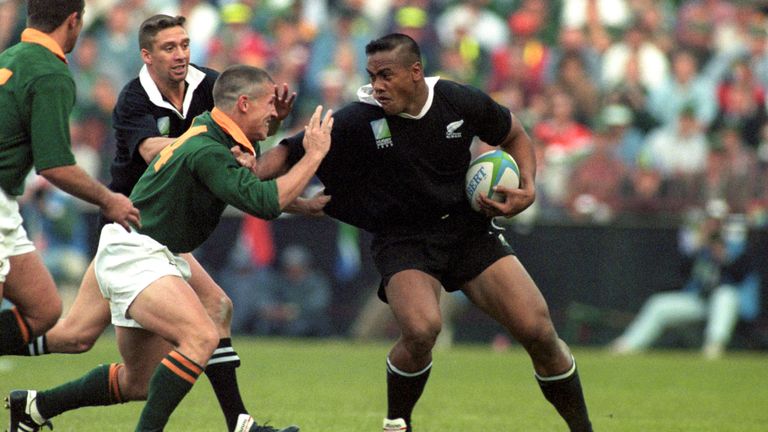
Jonah Lomu and New Zealand were huge favourites for the 1995 World Cup final, but the squad were struck down with violent illness
New Zealand’s ‘Incomparables’ and period of dominance
A little over a year after that World Cup final, the All Blacks toured South Africa in August 1996 set on revenge.
They had already beaten the Springboks home and away during the inaugural 1996 Tri-Nations, clinching the title, but a three-Test tour in South Africa against the world champions was built up as the next major challenge.
In New Zealand, that side are now known as ‘The Incomparables,’ as they played some magnificent rugby to launch rugby’s era of professionalism, winning the first Test 23-19 in Durban, and then the second Test 33-26 at Loftus Versfeld in Pretoria, clinching the series with a Test to spare.
South Africa won that third Test, but it mattered little as the All Blacks kicked on to win 13 of the next 17 contests – going unbeaten against the Boks between 2001 and July 2004. Tri-Nations titles followed in 1997, 1999, 2002 and 2003.
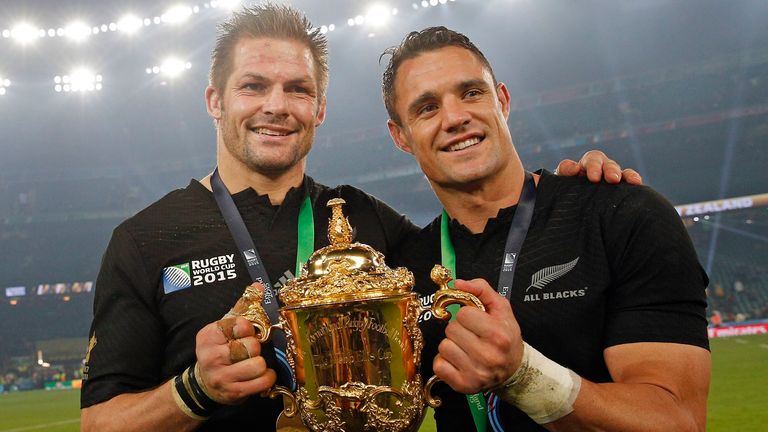
New Zealand’s 2015 Rugby World Cup winners, including likes of Richie McCaw and Dan Carter, are widely considered the greatest side ever
The Springboks landed Tri-Nations titles in 2004 and 2009, but outside of those years, New Zealand firmly established themselves as the premier nation on the globe.
The All Blacks won Tri-Nations titles four years in a row between 2005 and 2008, again in 2010, then three more years in a row between 2011 and 2013, and three more years in a row again between 2016 and 2018. They also lifted Rugby World Cup titles in 2011 and 2015 – the latter with a side many consider the greatest ever.
They were caught by France at the 2007 World Cup despite being huge favourites, as South Africa went on to lift their second Webb Ellis Trophy, but the Boks failed to clinch silverware in any form between 2009 and 2019.
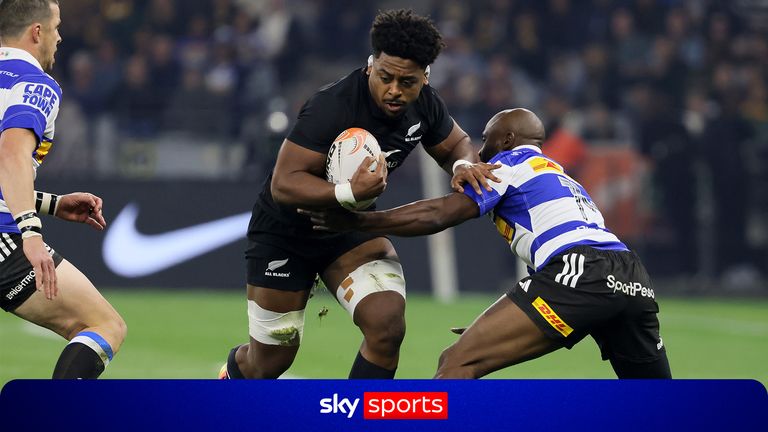
Highlights of the Greatest Rivalry tour match between the Stormers and New Zealand
A recent shift in South Africa’s favour
September 16, 2017 proved one of South Africa’s darkest rugby days, when they travelled to Albany and were defeated 57-0 by the All Blacks.
They were beaten by Ireland 38-3 in Dublin two months later, losing to Wales in Cardiff the same Test window. Such form followed a 2016 in which the Springboks were soundly beaten by England and Wales, lost to Italy for the first time, were beaten by Argentina and Australia, lost to Ireland at home and went down 57-15 to the All Blacks.
Enough was enough, and so heralded the era of Rassie Erasmus.
The controversial, unusual rugby head coach of the Springboks totally turned around South Africa’s fortunes.

Rassie Erasmus totally changed the fortunes of the Springboks when taking charge in 2018
By September 2018, a rejuvenated, confident side travelled to New Zealand and picked up a shock 36-34 victory in Wellington – a first win on Kiwi soil since 2009.
A little over a year later, South Africa became world champions for the third time, clinching World Cup glory vs England in the final in Japan – Eddie Jones’ side having dealt with the All Blacks in the semi-finals, after the latter had beaten South Africa during the pool stages.
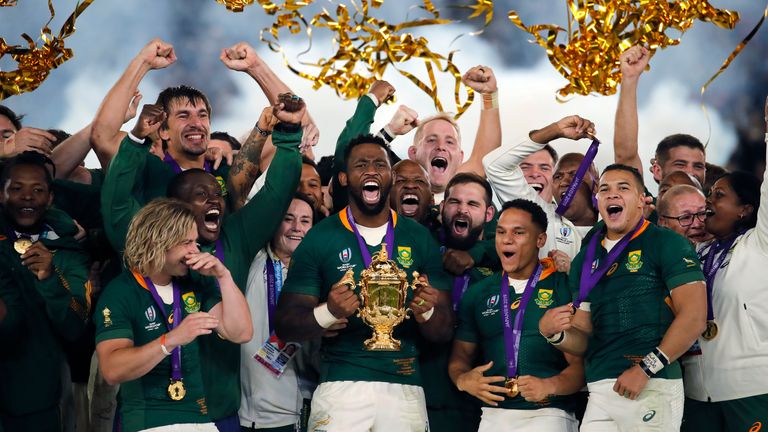
South Africa clinched Rugby World Cup glory for the third time in 2019, despite New Zealand earlier beating them during the pool stages
Since that tournament, in 11 Tests between South Africa and New Zealand, the Springboks have won seven of them, winning Rugby Championship crowns in 2024 and 2025, and the 2023 Rugby World Cup final – albeit the latter victory came in fortunate fashion, it must be said, against a 14-player All Blacks side who probably deserved victory.
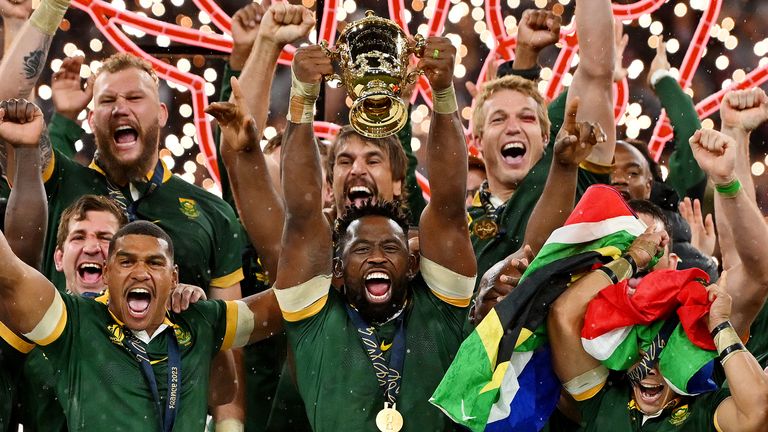
The Springboks narrowly beat New Zealand to win the 2023 Rugby World Cup final in Paris
If the 2023 South Africa side was strong, the current one is likely even better, with greater depth, while the All Blacks are looking to rebuild again under Dave Rennie, with Scott Robertson having been sacked.
“With eight matches in six weeks, including a four-Test series against the Springboks, this would have to be the toughest tour in rugby,” Rennie said.
“It will be an intense seven weeks of touring but an excellent opportunity for us to pit ourselves against the current benchmark team in world rugby, and to build connections with each other in a way that only a tour of this scale can do.”
New Zealand’s 2026 tour of South Africa, live on Sky Sports
Friday August 7: Stormers 21-38 New Zealand, Cape Town
Tuesday August 11: Sharks 0-54 New Zealand, Durban
Saturday August 15: Bulls 19-50 New Zealand, Pretoria
Saturday August 22: South Africa vs New Zealand (FIRST TEST), Ellis Park Stadium, Johannesburg (4.10pm BST)
Tuesday August 25: Lions vs New Zealand, Johannesburg (6pm BST)
Saturday August 29: South Africa vs New Zealand (SECOND TEST), Cape Town (4.10pm BST)
Saturday September 5: South Africa vs New Zealand (THIRD TEST), FNB Stadium, Johannesburg (4.10pm BST)
Saturday September 12: South Africa vs New Zealand (FOURTH TEST), M&T Bank Stadium, Baltimore USA (10pm BST)
Watch every minute of New Zealand’s eight-match tour of South Africa, exclusively live on Sky Sports.