Psoriasis is an autoimmune condition. It occurs when your immune system becomes overactive and causes skin cells to renew too rapidly.
It typically leads to areas of dry, inflamed skin, but may also affect your nails, joints, and other organs.
While there is no cure for psoriasis, medical treatments and self-care can help relieve your symptoms and reduce progression.
Read on to learn more about psoriasis, including its types, symptoms, causes, and treatment options.
What are the different types of psoriasis?
There are multiple types of psoriasis, and they can differ in appearance, triggers, and location on your body.
Plaque psoriasis is the most common type, comprising around 80% to 90% of psoriasis cases.
People can develop plaque psoriasis anywhere on the skin, but it typically forms on your scalp, knees, elbows, or lower back.
This type of psoriasis appears as small bumps on the skin. These bumps are usually small, discolored, and temporary.
Sometimes, guttate psoriasis causes one flare-up before going away and never returning. However, the condition can also persist or come back later.
Inverse psoriasis typically develops where skin touches other areas of skin, such as your buttocks, armpits, or genitals.
This type of psoriasis causes pus-filled bumps and usually appears on your hands and feet. The bumps may look like an infection but are not.
In rare cases, pustular psoriasis may develop on large areas of the body. This is known as generalized pustular psoriasis or von Zumbusch psoriasis. Generalized pustular psoriasis can be life threatening and requires emergency medical care.
Erythrodermic psoriasis is a serious, life threatening form of psoriasis that requires immediate medical attention.
Symptoms include:
- skin irritation that resembles a burn over most of your body
- chills or fever
- muscle weakness
- rapid pulse
- severe itching
Learn more about severe forms of psoriasis and what to do.
Nail psoriasis can cause:
- nail dents
- nail discoloration
- rough or crumbling nails
- nails that lift up from the nail bed
About half of people with plaque psoriasis experience fingernail symptoms at some point.
Psoriatic arthritis occurs when psoriasis affects your joints, causing them to become swollen and tender. It develops in up to 20% of people with psoriasis.
Most people notice psoriasis on the skin before they develop psoriatic arthritis. However, it is possible to get psoriatic arthritis first.
Read more about psoriatic arthritis symptoms.
What are the symptoms of psoriasis?
The most common symptom of psoriasis is skin that is dry and thick with raised patches. Other common symptoms of psoriasis include:
- discolored skin patches, which can appear as pink, red, purple, gray, or darkened skin
- white or silvery scales
- itching
- soreness
- bleeding
- pus-filled blisters
- hair loss
- tiny dents or pits in the nails
- nail discoloration
In severe cases, psoriasis can cause fever, chills, rapid heart rate, and fatigue. If you experience any of these symptoms, get medical help right away.
What does psoriasis look like?
The following images show what psoriasis can look like:

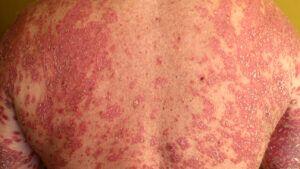
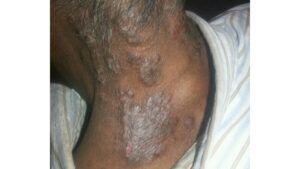
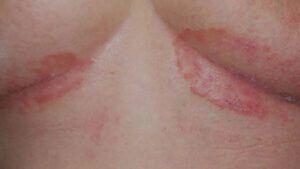

Experts suggest psoriasis develops due to a problem with the immune system.
With psoriasis, immune cells called T cells mistakenly attack healthy skin cells. This causes your body to produce new skin cells more quickly than usual, which then build up on your skin’s surface.
However, researchers do not yet know what causes this immune process to happen in the first place.
Genetics probably plays a role in psoriasis development, as you are more likely to have it if you have a close relative with the condition. Research has also shown that a range of different genes, combined with environmental factors, is likely to make people more susceptible to psoriasis.
Psoriasis is not contagious. You cannot develop psoriasis from touching another person’s skin or something they have touched.
What are the risk factors for psoriasis?
Psoriasis affects around 3% of adults in the United States, which is over 7.5 million people. It is most common in adults, but children can also develop psoriasis.
Certain triggers can make psoriasis symptoms worse or more frequent, known as a flare-up. Some common triggers for psoriasis flares include:
- skin injuries, such as cuts or scrapes
- air pollution or sun exposure
- certain medications
- recent infections
- smoking
- alcohol use
Some conditions may also increase the risk of psoriasis developing or make symptoms more severe, such as:
- metabolic syndrome
- obesity
- diabetes
- high cholesterol
- high blood pressure
- mental or emotional stress
- other immune disorders
However, not everyone who experiences risk factors will develop psoriasis.
Reducing your risk of psoriasis flare-ups
You can help reduce the risk of psoriasis flares by:
- identifying and avoiding your triggers
- avoiding scratching your skin
- protecting your skin from injury, such as sunburn, irritants, and bug bites
- applying moisturizer regularly
- eating a balanced diet as recommended by a medical professional
- getting regular physical activity
- avoiding smoking and drinking alcohol
- managing stress
- working with a doctor to treat other conditions you have, such as high blood pressure or diabetes
What are the treatments for psoriasis?
Doctors will tailor their treatment recommendations to the symptoms and severity of your psoriasis.
Topical treatments are usually the first line of treatment for mild to moderate psoriasis and can take up to 6 weeks to take effect. Some types of topical medications doctors use to treat psoriasis include:
- emollient moisturizers
- topical steroids
- vitamin D analogs
- calcineurin inhibitors
- coal tar
- dithranol
If your psoriasis is severe or topical medication has not helped, a doctor may prescribe oral or injected medications. These are known as systemic medications and can include:
- methotrexate
- cyclosporin
- acitretin
- apremilast
- biologic medications, such as:
- etanercept
- adalimumab
- infliximab
- ustekinumab
Learn more about common psoriasis medications.
Other procedures and therapies
Phototherapy uses natural and artificial light to help treat severe psoriasis by slowing the production of new skin cells. It’s different from a tanning bed and sun exposure.
Physical therapy and rehabilitation may also help improve symptom management and quality of life.
Talk with a doctor if you have questions about psoriasis treatments or therapies.
Learn more about phototherapy for psoriasis.
What remedies can help psoriasis?
Skin care and self-care can help manage psoriasis alongside medical treatments.
Aim to use mild soaps, moisturizers, and detergents that don’t contain irritating ingredients for sensitive skin. A doctor or pharmacist can help recommend suitable over-the-counter options.
Using a symptom diary and working with a doctor can also help you identify and avoid psoriasis triggers.
Some people use alternative remedies for psoriasis, such as acupuncture, colloidal oat baths, and supplements. However, many remedies don’t have thorough medical research to support their safety and effectiveness.
Some remedies can also be irritating or interact with other medications.
Always talk with a doctor or pharmacist before trying a new home remedy.
Learn more about home remedies and alternative psoriasis treatments.
Other frequently asked questions
Below are some more questions people often ask about psoriasis. Raechele Gathers, MD, has reviewed the answers.
How can I cure psoriasis permanently?
Currently, there is no way to cure psoriasis.
However, some people experience remission, when psoriasis symptoms disappear for a while. In most cases, remission lasts 1 to 12 months.
It’s impossible to know who will experience remission. Treatment with medications, phototherapy, and self-care may increase your chances.
What is the life expectancy of someone with psoriasis?
Life expectancy is lower in people with psoriasis than those without the disease. Some studies suggest that psoriasis shortens life spans by 4 years and possibly up to 10 years.
However, treatment and managing triggers can help improve your outlook with psoriasis.
Psoriasis is an autoimmune condition that causes thick, dry skin with raised patches.
Researchers are unsure what causes psoriasis to develop. However, risk factors, such as sun exposure, certain medications, stress, and smoking, can trigger flares of psoriasis symptoms.
Treatment for psoriasis includes medications, at-home skin care, and lifestyle approaches.