Thyroid eye disease is also known as Graves’ eye disease or Graves’ ophthalmopathy. While more common in people with an overactive thyroid, it can also affect those with an underactive or normal thyroid.
This article further defines thyroid eye disease. It also explains the symptoms, causes, and treatments for the condition.

Thyroid eye disease is a condition that affects the appearance and function of the eyes. About 90% of cases of thyroid eye disease occur in people who have Graves’ disease.
Graves’ disease is an autoimmune disorder. It is the most common cause of hyperthyroidism, or overactive thyroid, in the United States, according to the American Thyroid Association.
In Graves’ disease, the immune system makes antibodies that mistakenly attach to receptors in the thyroid gland. This stimulates the gland to make too much thyroid hormone. These antibodies can also target receptors in orbital tissues surrounding the eyes. In some cases, they may also target the skin on the legs.
Antibodies that affect the orbital tissue receptors can trigger inflammation and other symptoms in both eyes. However, these symptoms often affect one eye more than the other. Around 1 in 3 people with Graves’ disease will develop thyroid eye disease.
Contact your doctor right away if you experience persistent eye issues, irritation, pressure, or puffiness. It is important to visit your doctor regularly if you have Graves’ disease. Routine monitoring can help them identify any developing eye issues.
Read more about Graves’ disease.
Thyroid eye disease symptoms affect one or both eyes and can range from mild to severe.
You may experience changes in your eyes before receiving a diagnosis of Graves’ disease. However, you may also experience changes at the time of diagnosis or after diagnosis. Most often, symptoms of thyroid eye disease begin within 6 months of diagnosis.
Common symptoms of thyroid eye disease
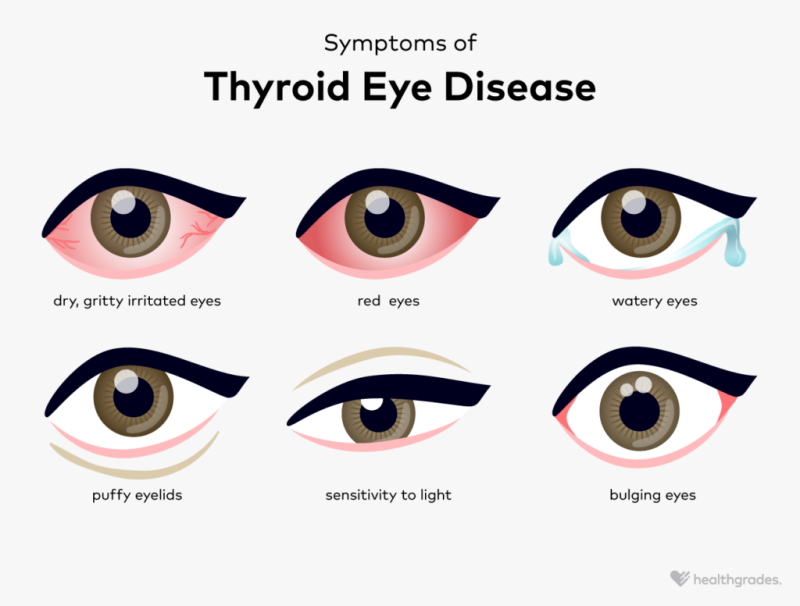
The main symptom of thyroid eye disease is bulging eyes or proptosis. Other symptoms you may experience include:
- lid retraction, giving a startled or staring appearance
- dry or irritated eyes
- gritty feeling
- watering eyes
- eyelid swelling or puffiness
- redness of the eyes
- double vision
- pain or pressure in your eyes
- light sensitivity
- difficulty moving your eyes
Symptoms of advanced or late thyroid eye disease
In more advanced phases of thyroid eye disease, you may experience other symptoms, including:
- eye pain and headaches
- inability to move your eye
- colors appearing less bright or dull
- incomplete closure of the eyelids, which can lead to corneal ulcer
- blurred vision or vision loss due to optic nerve compression or corneal damage
Vision loss due to thyroid eye disease is rare.
The active phase of the condition can last between 6 months and 2 years. This is typically followed by an inactive phase where progression of the condition stops. However, during the inactive phase, blurred vision and bulging eyes may remain.
Thyroid eye disease is most commonly due to Graves’ disease. It occurs when your immune system attacks muscle and other tissue around your eyes. This leads to swelling behind your eyes, causing them to bulge.
The cause of Graves’ disease is not yet known. However, researchers believe genetics and environmental factors may play a role in its development.
Read about autoimmune conditions and your eyes.
Certain factors may increase your risk of developing thyroid eye disease. These include:
- advanced age
- family history of thyroid eye disease
- genetics
- smoking
- second hand smoke
- radioactive iodine treatment
- uncontrolled diabetes
- high stress levels
- uncontrolled thyroid disease
Females are more likely to develop thyroid eye disease than males.
If you have Graves’ disease, speak with your doctor about your risk of thyroid eye disease.
Learn about hyperthyroidism.
If your doctor believes you may have Graves’ disease, they will order a blood test to check your thyroid levels.
An eye doctor can also check for thyroid eye disease during an eye exam.
If you have Graves’ disease, it is important to have regular check-ups with your eye doctor. This can help with early detection of any issues caused by thyroid eye disease.
Treatment for thyroid eye disease usually starts by addressing the issues with your thyroid. This typically involves medication to bring your thyroid hormone levels back into balance.
Other treatments for eye problems caused by thyroid eye disease include:
- Over-the-counter (OTC) eye drops: Drops known as artificial tears can be used to help manage the irritation from thyroid eye disease.
- Prescription medication: Your doctor may recommend a newer medication called teprotumumab (Tepezza). This is the only medication approved by the Food and Drug Administration (FDA) to specifically treat thyroid eye disease. They may also recommend steroids or other medications to help reduce swelling in your eyes.
- Eyeglasses: If you are experiencing double vision, your doctor may recommend eyeglasses. These can correct your vision and help you see more clearly.
- Surgery: Your doctor may recommend orbital decompression. This makes the eye socket bigger and eases pressure on the optic nerve. It also helps move the eye into the proper position. If your eyelids pull back too much, they may recommend eyelid surgery to correct their position.
- Radiation: In some cases, doctors may recommend radiation to treat thyroid eye disease. This can help reduce swelling in the tissue and muscles around your eye.
Certain lifestyle changes can also help manage thyroid eye disease. These include:
- avoiding or quitting smoking
- avoiding second hand smoke when possible
- using OTC eye drops and wearing sunglasses to reduce light sensitivity
- raising your head higher than your body while you sleep to help reduce eye puffiness
- taping your eyelids shut at night to prevent dry eyes
Thyroid eye disease can affect each person differently. Talk with your doctor to design the most effective treatment plan for you.
Ryan Corte, O.D. has reviewed these questions people frequently ask about thyroid eye disease.
What triggers thyroid eye disease?
Thyroid eye disease, or Graves’ eye disease, is an autoimmune condition. It is mainly caused by stimulation of the thyroid stimulating hormone (TSH) receptor. Thyroid eye disease is most common in people with Graves’ disease.
Is thyroid eye disease curable?
Mild cases of thyroid eye disease may resolve on their own. Moderate to severe cases may require medical treatment. In some cases, the eyes may return to normal with effective treatment. In other cases, there may be permanent damage to the eyes.
Can thyroid eye disease be detected with an eye exam?
Yes. Your eye doctor can detect issues caused by thyroid eye disease during an eye exam. However, you may require further blood tests and imaging tests to confirm the diagnosis.
What are the stages of thyroid eye disease?
There are two phases of thyroid eye disease.
The active phase is when all of the symptoms are present and the condition is progressing. This can last from 6 months to 2 years.
The second phase is the inactive phase. During this time, many of the symptoms subside and the condition stops progressing.
Thyroid eye disease is an autoimmune condition that causes swelling of the tissue and muscles around the eyes. It is most common in people with Graves’ disease.
Symptoms of thyroid eye disease include bulging eyes, redness and irritation, and puffiness of the eyelids.
Treatment typically involves eye drops, medication, and lifestyle changes, such as quitting smoking.
If you have Graves’ disease, it is important to have regular eye exams. This can help your doctor detect symptoms of thyroid eye disease early. With treatment, symptoms of thyroid eye disease may resolve. In some cases, however, there may be lasting effects.
Talk with your doctor if you have Graves’s disease or are concerned about thyroid eye disease.